When you compare selective demolition quotes, the totals can be far apart even when every contractor walked through the same space. That does not automatically mean one quote is wrong. It often means the contractors understood the job differently.
Selective demolition is defined by two things: what comes out and what must stay. A kitchen, bathroom, office, or retail space can look like one simple demo job, but the scope can change based on removal limits, retained items, access, protection, debris haul-off, and the condition the space needs to be in when the work is done.
At Florida Hauling & Demo, we recommend getting those details clear before you choose between estimates. The goal is not to assume the cheapest quote is bad or the highest quote is best. The goal is to make sure you are comparing the same job.
Why Selective Demolition Quotes Can Be So Different
A demolition estimate is based on the contractor’s understanding of the demolition scope, not just the size of the room. Two contractors can hear the same phrase, such as “demo the kitchen,” and picture different stopping points.
One Contractor May Be Removing More Than Another
One quote may include cabinets, flooring, drywall, fixtures, and remaining adhesive. Another may include only cabinets and flooring. Both may still be described as kitchen demolition, but they are not the same scope.
Read the actual removal list. If one estimate names more materials, more rooms, or more surfaces, that can explain part of the difference before price ever enters the discussion.
The Items That Stay Can Change the Work
Selective demolition often happens around parts of the property that need to stay. Those retained items may include cabinets, countertops, doors, walls, fixtures, finished floors, or nearby rooms that are not part of the work.
Working around retained items can require more careful preparation and a more limited removal approach than a full tear-out. That is why your keep list should be just as clear as your removal list.
Compare first: The first question is not “Which quote costs less?” It is “Are these contractors quoting the same job?”
Start by Comparing Exactly What Is Being Removed
Put the estimates side by side and compare what is being removed line by line. Do this before you focus on the total at the bottom of the page.
Look for Clear Removal Limits
A useful scope should make the removal limits reasonably clear. Look for which rooms, walls, flooring, ceilings, fixtures, cabinetry, concrete, or other materials are included. If a proposal simply says “demo” without defining the boundaries, ask what that wording means for your project.
The more selective the job is, the more important the stopping points become. A wall may be removed only to a certain edge. Flooring may stop at a doorway. Cabinets may stay while the surrounding finishes come out.
Check How Partial Demolition Is Defined
Partial demolition needs a clear line between remove and keep. If only part of a patio, wall, ceiling, or room is being taken out, ask where the contractor plans to stop and what is expected to remain.
This is especially important when the next phase will tie new work into the old work. A general contractor, builder, or remodeler may have a specific stopping point they need the demolition crew to follow.
Confirm What Is Supposed to Stay
Make a short keep list for anything you expect to remain. Compare that list with each selective demolition estimate. If a cabinet bank, countertop, doorway, fixture, or finished surface matters to you, do not rely on an assumption that everyone understood it the same way.
Keep list: In selective demolition, the “keep” list can be just as important as the “remove” list.
Compare the Protection Included Around the Demolition Area
Two quotes may also assume different levels of protection around the work area. Interior demolition creates dust and debris, and the route to and from the work zone can pass through areas that are staying in place.
Ask What Will Be Protected
Ask what the contractor plans to protect based on the project. That may include nearby floors, fixtures, ducts, furniture, access paths, or other finished areas that are outside the demolition scope.
Florida Hauling & Demo uses project-specific preparation such as containment walls, plastic protection for ducts and fixtures, and cardboard along access routes when relevant to interior work. You can read more about how we protect surrounding areas during demolition. These measures help control dust and protect surrounding areas, but they should not be treated as a promise of dust-free work.
Ask About Containment and Dust-Control Measures
If one quote includes containment and another does not mention it, ask both contractors what is included. You are not looking for identical wording. You are trying to understand whether the work plans are actually comparable.
For suspected hazardous materials, a normal walkthrough is not proof that a space is clear. Testing, abatement, or other specialist work should be handled by the appropriate qualified party when needed.
Check Whether Debris Removal and Cleanup Are Included
Removing material from a wall or floor is only part of the job if that material still has to be loaded, carried out, and hauled away. A low number can look less attractive once you learn that debris removal is separate.
Confirm Who Is Hauling Away the Debris
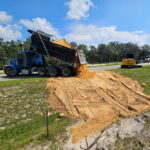
Check whether debris haul-off is included in each estimate, excluded, or expected to be handled by someone else. If one proposal includes loading and haul-off and another does not, you are not comparing the same scope.
If you want more detail on this part of the process, see what happens to demolition debris after removal. For any estimate, the written scope should control what is actually included.
Define What “Cleanup” or “Job Complete” Means
Words like “cleanup” and “complete” can mean different things. Ask what condition the work area is expected to be in at the end of the agreed demolition work and what is left for the next trade.
This does not mean demolition alone makes every surface ready for rebuilding or installation. It means the stopping point should be clear enough that you and the next contractor know what to expect.
Scope check: A quote that includes haul-off and a defined handoff cannot be compared fairly with one that ends when demolition is finished.
Compare Access and Jobsite Assumptions
The same amount of demolition can be a different job depending on how workers, tools, and debris move through the property. Access assumptions should be part of your comparison when they affect the work.
Look at the Route In and Out
Consider whether the work area has direct exterior access or whether the crew must move through finished rooms, stairs, elevators, narrow paths, or occupied areas. These conditions can change the amount of preparation and handling involved.
You do not need to guess how much any one condition changes the estimate. Ask the contractor what access was assumed when the quote was prepared.
Confirm Any Site Conditions the Quote Assumes
An estimate may assume that certain items will be moved before work begins, that a route will be available, or that another contractor will complete a separate task first. Find out whether those assumptions match the real jobsite.
A difference in access assumptions can make two quotes look farther apart than they really are.
Read the Exclusions Before Comparing the Totals
The exclusions section can explain a large part of the difference between proposals. An exclusion is not automatically a warning sign. It tells you where that contractor’s responsibility stops.
Watch for Work Assigned to Other Trades or Specialists
Structural evaluation, utility work, suspected hazardous-material testing or abatement, rebuilding, and new installation may need to be handled by other qualified parties. Do not assume those tasks are included in a demolition quote unless the scope clearly says they are and the contractor is qualified to provide them.
If a wall may be structural, utilities are involved, or there is a concern about hazardous material, stop treating the issue as a simple price comparison. Confirm the proper assessment and responsibility before the demolition scope expands.
Clarify Anything That Is Not Known Yet
Some conditions are hidden behind finishes or below materials that have not been removed. A walkthrough cannot prove that no hidden damage, utility issue, or other condition is present.
If part of the quote depends on what is found after work starts, ask how that uncertainty will be handled. The important point is to know what the current estimate covers and what would require a new decision.
Exclusions: An exclusion is not automatically a problem. An exclusion you did not understand can become one.
Compare What Happens After the Demolition
Most selective demolition is not the final goal. It is preparation for remodeling, flooring, construction, plumbing, electrical work, or another trade. That means the handoff condition matters.
Ask What the Next Contractor Needs
Talk with the remodeler, builder, flooring installer, or other next trade when their requirements affect the demolition. Ask what needs to be gone, what needs to remain, and where they need the demolition crew to stop.
This keeps you from paying to remove something the next contractor wanted to keep or leaving something in place that blocks the next phase.
Make Sure the Demolition Scope Matches That Handoff
Flooring is a good example. Flooring removal may leave thinset or adhesive behind. Whether that material also needs adhesive removal or floor scraping depends on what the next installer requires and what is included in the demolition scope.
The same idea applies to walls, fixtures, concrete, and other selective work. Define the handoff around the next phase instead of treating demolition as a stand-alone task.
How to Compare Selective Demolition Quotes Side by Side
Once you know the main scope questions, make a simple comparison sheet. You do not need a complicated bidding system. You only need enough detail to see where the proposals match and where they do not.
Compare These Items Line by Line
Use the same categories for every estimate:
- Exact materials and areas being removed
- Items being retained
- Protection and containment
- Access assumptions
- Debris loading and debris haul-off
- Cleanup or handoff condition
- Explicit exclusions
- Work assigned to another party
- Unknown conditions that still need clarification
If the categories line up, the totals become much easier to compare. If they do not line up, you have found the questions to ask before hiring.
Ask Contractors to Clarify Differences in Writing
When you find a material difference, ask for clarification in writing. You are not asking every contractor to use the same proposal template. You are making sure you understand what each number represents.
A short written clarification can prevent a verbal assumption from becoming a scope dispute later. The key takeaway is to compare the scope before you compare the total.
Price check: Compare scope first. Compare price second.
Does a Lower Selective Demolition Quote Mean Something Is Missing?
Not necessarily. A lower selective demolition quote may cover exactly what your project needs. Contractors can estimate and organize work differently, and price by itself does not prove that anything is missing.
The problem is not a low number. The problem is an unclear scope that makes the number hard to evaluate.
When a Lower Quote May Simply Be a Better Fit
If the lower quote clearly covers the same removal limits, retained items, protection, access, debris responsibility, exclusions, and handoff, it may simply be the option you prefer. There is no reason to assume a higher price is automatically more complete.
When You Should Ask More Questions
Ask for clarification when one proposal leaves out items that appear in the others, uses vague scope language, does not define important retained items, or leaves debris, protection, access, or exclusions uncertain.
You should also ask questions when the work involves structural elements, utilities, or suspected hazardous materials. Those concerns may require the appropriate specialist before the demolition scope can be finalized.
What to Ask Before Choosing a Selective Demolition Contractor
You can bring the comparison down to a short set of questions. Ask each contractor the same basic things, then compare the answers with the written estimate.
- Exactly what are you removing?
- Exactly what is staying?
- What nearby areas or finishes are being protected?
- Is debris haul-off included?
- What condition will the area be left in?
- What is specifically excluded?
- Is anything expected from me or another contractor before demolition starts?
- Are there parts of the scope that cannot be confirmed until work begins?
- Does this scope match what my remodeler, builder, or next trade needs?
If your project is an interior strip-out, our related guide on selective demolition for an interior strip-out explains why a defined selective scope can help the next phase start with fewer surprises.
You do not need the longest estimate. You need an estimate that is clear enough for you to understand the work, the boundaries, and the responsibilities.
Get the Scope Clear Before the Demolition Starts
The best time to resolve a scope gap is before demolition begins. Confirm what should go, what must stay, what needs protection, how debris will be handled, and what the next contractor needs from the space.
Florida Hauling & Demo can discuss those details with you when preparing a selective demolition estimate. We focus on defining the removal scope, protecting surrounding areas as the project requires, handling debris haul-off within the agreed scope, and creating a clear handoff for the next phase.
If you have competing estimates and are not sure whether they cover the same work, call Florida Hauling & Demo at (727) 602-6982 to discuss your project and request a free estimate. Bring the other scope questions with you. The goal is to know what you are hiring before the first material comes out.
Frequently Asked Questions
How do I compare selective demolition quotes?
Compare selective demolition quotes by checking the exact removal scope, retained items, protection, access, debris haul-off, handoff condition, and exclusions. Resolve any material differences before you compare the final totals.
Why can two selective demolition estimates be so different?
The contractors may be quoting different removal limits, site conditions, protection, access, haul-off, or stopping points. The project can sound the same in conversation while the written scopes are different.
Should I automatically choose the lowest demolition quote?
No. The lowest quote may be a good fit, but price alone does not show whether the scope matches your project. First confirm that each estimate covers the work you actually need.
What should be included in a selective demolition estimate?
There is no single format every estimate must use. As a practical comparison, look for clear removal areas, important retained items, relevant protection, debris responsibility, exclusions, and the expected stopping point or handoff.
Does selective demolition include debris removal?
It depends on the contractor and the quoted scope. Confirm whether loading and debris haul-off are included rather than assuming they are part of every selective demolition quote.
What if the contractor finds hidden damage during demolition?
Hidden conditions may not be visible before materials are removed. If something unexpected is found, determine what it is, whether the appropriate specialist needs to assess it, and whether the agreed demolition scope should change before additional work continues.